

AEC: Tại sao AI Voice Assistant Cần Khử Echo
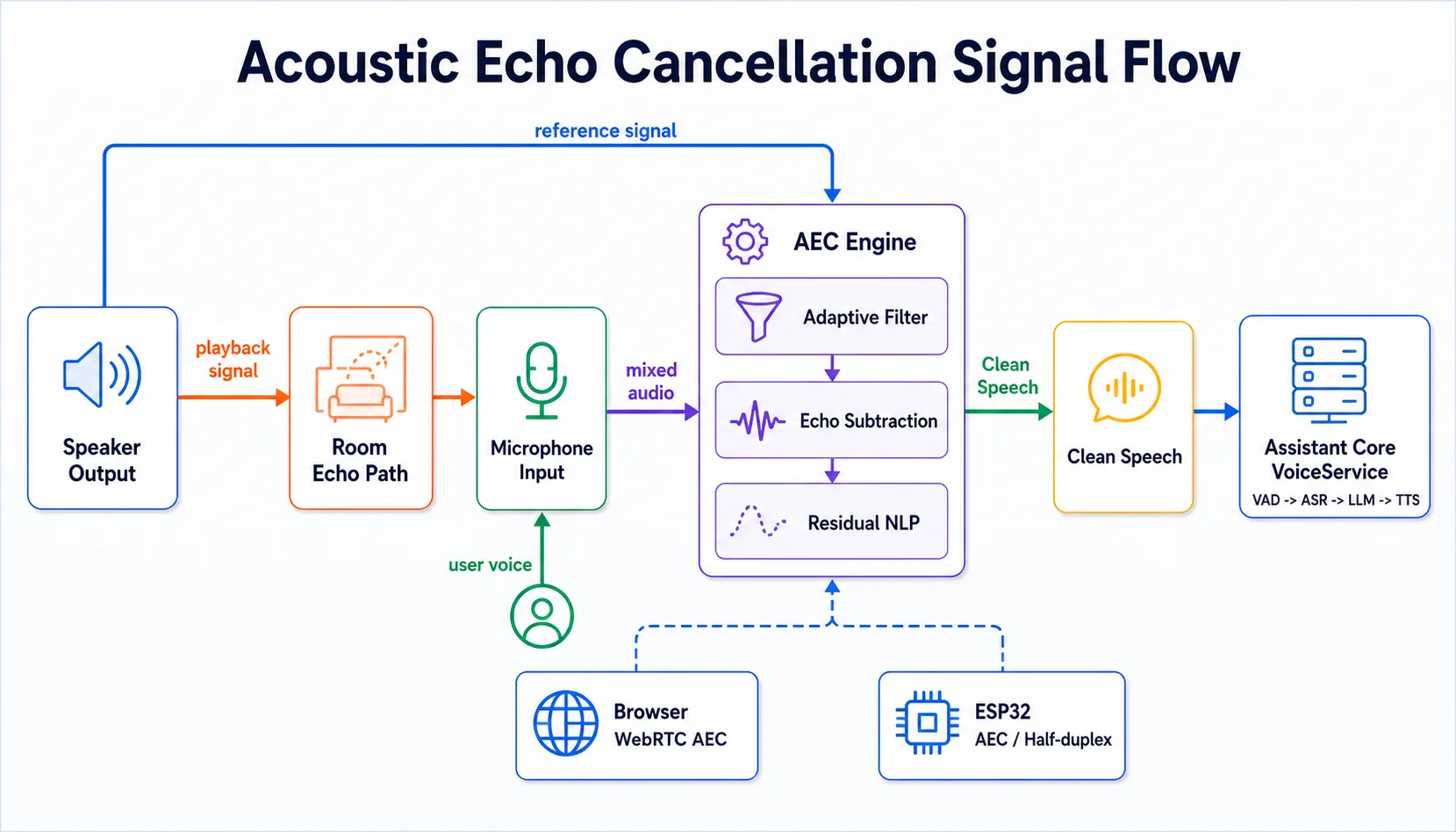
Giải thích Acoustic Echo Cancellation từ thuật toán NLMS đến thực tế triển khai trên browser (AEC3) và ESP32 (ESP-ADF). Bao gồm so sánh AEC support giữa OpenAI, Gemini Live và xAI Grok.
Give one assistant your knowledge base, tools, voice, and brand identity — then deploy it across web, mobile, embedded widgets, and connected hardware without rebuilding logic per channel.

Give one assistant the right brain, memory, tools, voice, assets, and deployment surfaces instead of maintaining a fragmented fleet of assistants per channel.
Control system prompt, model choice, knowledge base, tools, MCP connections, behavior, and access for each assistant.
Connect documents, websites, and structured sources so answers stay tied to the information your team trusts.
Pipeline VAD → ASR → LLM → TTS with Opus audio for natural voice conversations at low latency.
Let the same assistant call built-in tools, custom APIs, server MCP, endpoint MCP, and device-side MCP tools.
Every conversation — whether started on web, mobile, embedded widget, or a voice device — is stored in one place. Users pick up exactly where they left off, on any surface.
Choose among VAD, ASR, LLM, TTS, and realtime models across OpenAI, Google, Anthropic, xAI, DeepSeek, Xiaomi, ElevenLabs, Soniox, and local providers.
Customize device theme, fonts, emoji packs, wake words, and backgrounds, then deploy across edge devices and wearables.
Your assistant remembers context across conversations, learns from interactions, and builds institutional knowledge over time — automatically extracted and retrieved via pgvector.
Assistant Core is designed around a single assistant identity that can be configured deeply and delivered across web, app, embedded widgets, device voice, and wearable-style interfaces.
Define system prompt, personality, model stack, memory behavior, permissions, and tenant-specific settings.
Connect documents, web pages, files, and knowledge bases so answers stay tied to your business context.
Attach tools, MCP servers, endpoint tools, and device-side capabilities so the assistant can do real work.
Deploy to web, app, embed, voice devices, and wearable interfaces with custom fonts, themes, emoji, wake words, and backgrounds.
Switch between 7+ leading providers without changing your assistant configuration — from LLM reasoning to voice synthesis and embeddings.
Mix and match providers per assistant. Switch at any time without changing your configuration.
Every channel — web, mobile, widget, voice device — flows into the same centralized data layer, so conversation history, memory, and context are always in sync regardless of where the user is.
Maintain a single, powerful assistant identity while seamlessly adapting the interface and capabilities for each customer interaction.
Deliver accurate answers based on product documentation and order APIs using the same core assistant across web chat and support portals.
Conversations started on web continue on mobile, then on a voice device — all history centralized in one place so users never lose context when switching channels.
Equip your team with a centralized assistant that searches company archives, retains context, and securely executes internal tools.
Bring your assistant to edge hardware and realtime voice channels using low-latency MQTT transport without rewriting any logic.
Customize fonts, emotional emoji packs, wake words, and UI themes for every device to ensure a consistent brand experience.
Instead of maintaining a separate assistant per channel, configure one unified assistant and adapt its behavior, voice, tools, knowledge, and device presentation for every surface.
Every interaction is protected by defense-in-depth: encryption in transit, strong authentication, tenant isolation, and full audit trails.
TLS 1.3 encryption on all HTTP, WebSocket, and MQTT connections. No plaintext data in transit.
JWT access + refresh tokens, Google/GitHub OAuth with HMAC-signed state and Redis-backed nonce to prevent replay attacks.
Role-based access control with scoped JWT claims. Per-assistant permissions and multi-tenancy isolation at the request level.
Encryption at rest via PostgreSQL and S3 server-side encryption. Row-level isolation between tenants.
Per-user and per-IP rate limiting. CORS policies. DDoS mitigation at the load balancer layer.
Full request logging, Langfuse LLM tracing, and Grafana dashboards for real-time security monitoring.
Compare key capabilities across leading AI platforms. Assistant Core is the only platform with full provider freedom, edge device support, and white-label deployment.
| Feature | Assistant CoreYou | ChatGPT | Claude.ai | Manus | OpenClaw |
|---|---|---|---|---|---|
| AI Provider Choice | 7+ providers | OpenAI only | Anthropic only | 2–3 models | 1–3 models |
| Edge Device / IoT | |||||
| White-label Branding | |||||
| Realtime Voice Pipeline | |||||
| Knowledge Base | |||||
| MCP Tools | |||||
| Multi-tenant | |||||
| Self-hosted |
Technical deep-dives, product updates, and best practices for building AI-powered products.
Giải thích Acoustic Echo Cancellation từ thuật toán NLMS đến thực tế triển khai trên browser (AEC3) và ESP32 (ESP-ADF). Bao gồm so sánh AEC support giữa OpenAI, Gemini Live và xAI Grok.
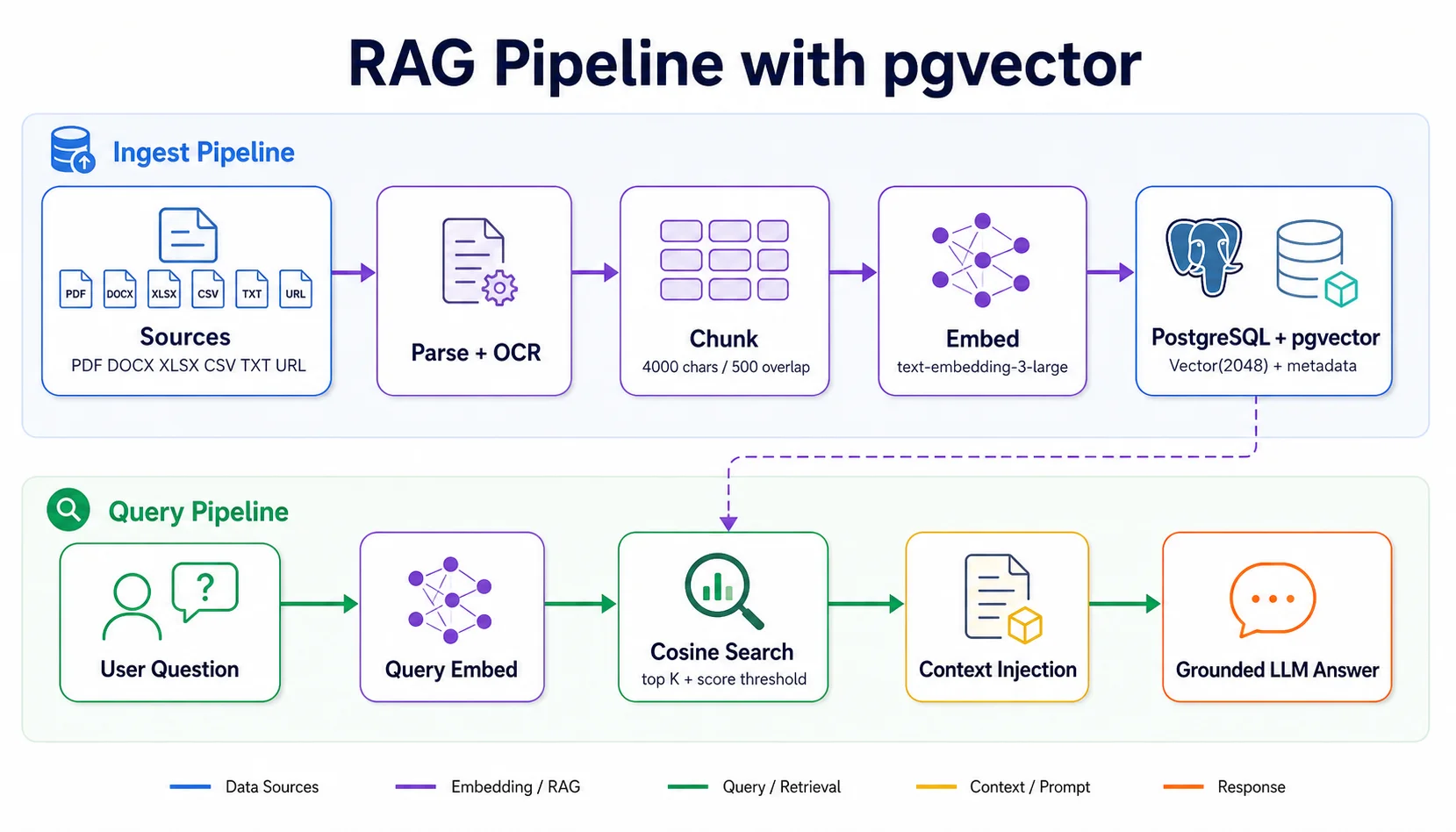
Cách chúng tôi xây dựng retrieval-augmented generation pipeline xử lý PDF, DOCX, URL web với chunking, embedding và cosine search — đạt 91% accuracy so với 34% khi dùng LLM thuần.
Tại sao chúng tôi từ bỏ WebSocket cho thiết bị phần cứng và chuyển sang MQTT + UDP — giảm latency từ 380ms xuống 165ms, RAM từ 45KB xuống 12KB, và tăng 40% battery life.
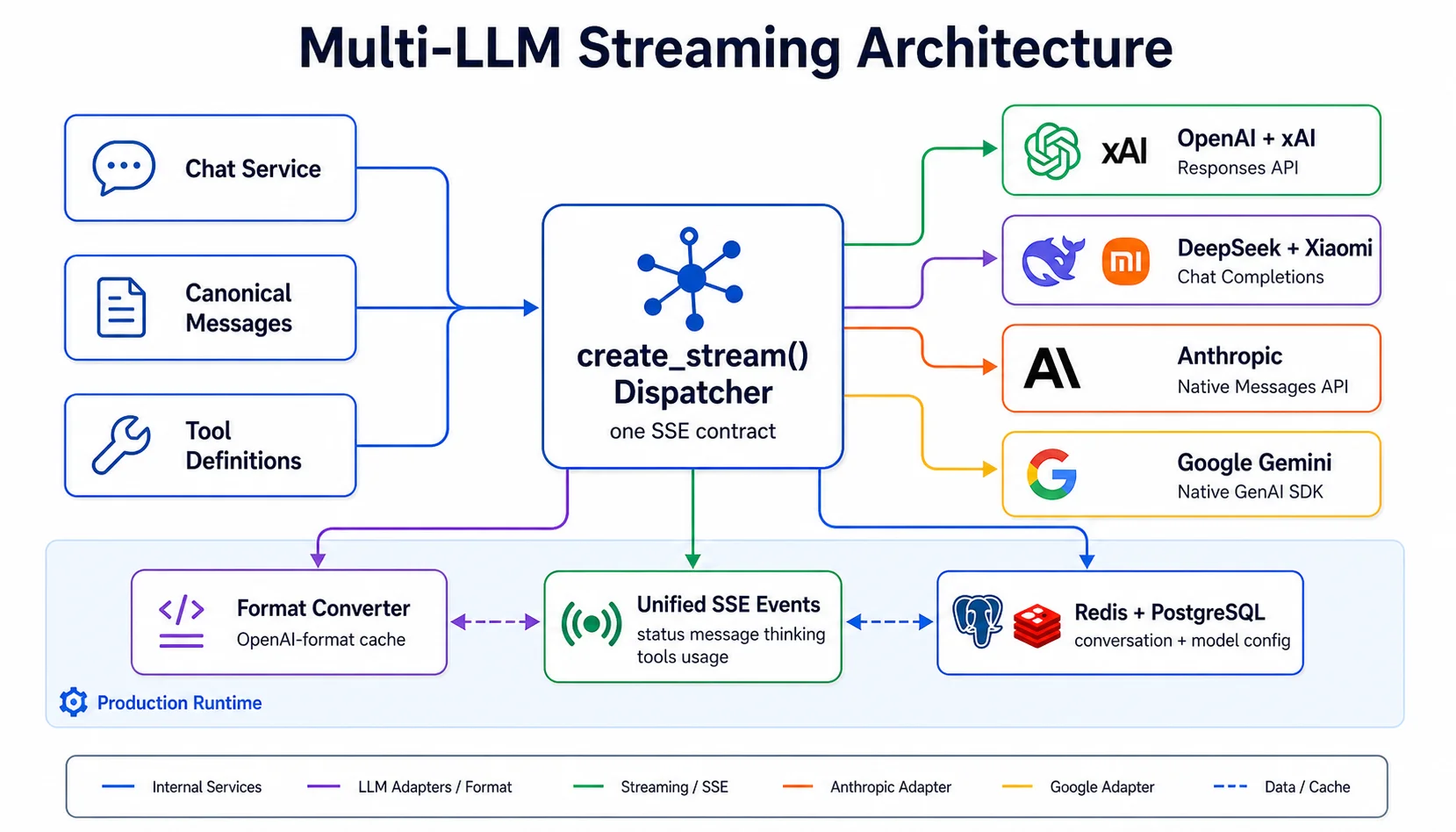
Cách chúng tôi tích hợp OpenAI, Anthropic, Google, xAI, DeepSeek và Xiaomi qua native SDK — cho phép user đổi model giữa cuộc trò chuyện, tiết kiệm tới 90% chi phí input token nhờ prompt caching, và deploy zero-downtime.
Start with one assistant, then shape its prompt, tools, knowledge, voice, model providers, and channel experience as your product grows.